Tuesday, October 19, 2010

Alkali metals: sodium

Creative Commons License
This work is licensed under a Creative Commons Attribution 2.0 Generic License.


The alkali metals are the metals in the first column on the left of the periodic table, including Lithium (Li), Sodium (Na), Potassium (K), Rubidium (Rb), Cesium (Cs), and Francium (Fr). They are notoriously "reactive" metals, forming metal hydroxides and hydrogen gas from water. In the case of the heavier alkali metals, this reaction can be QUITE exothermic! In the previous post on quenching a THF still, we saw how important it was to quench the remaining sodium very slowly and carefully with water. But Rubidium and Cesium are orders of magnitude more reactive with water than is sodium.

One commonality among the alkali metals is that they have one electron in the highest energy level, so they can lose that one electron to form an ionic bond with another element or group (typically an element or group that can easily gain one electron). For example, sodium metal and chlorine gas react to form sodium chloride (NaCl), which is used as "table salt," among other things. In fact, it is so useful that we have developed very effective ways of extracting it from salt rock (AKA "halite) all over the world. The picture above shows the Uyuni salt flats in Bolivia.

While sodium is an essential element in our diet in small amounts (e.g., we need it for the transmission of nerve impulses and for the contraction of muscles), it can be very harmful in large quantities. Too much sodium leads to increased blood pressure; increased blood pressure can lead to heart disease, stroke, etc. There are several sources of sodium in our diet, including processed foods (crackers, bread, baked goods, etc.), natural sources (milk, meats, fish, celery, etc.) and soy sauce. Sodium shows up in these foods not just in the form of NaCl but also as a component in several popular food additives/preservatives: Monosodium glutamate (MSG), baking soda (sodium bicarbonate, NaHCO3), disodium phosphate, sodium nitrate, sodium nitrite, and sodium alginate, just to name a few.

While some people choose to limit their sodium intake altogether and sacrifice the salty taste they know and love, others prefer to use so-called "salt substitutes," such as potassium chloride, which have a similar taste to sodium chloride, with the added advantage of being more heart-healthy. But at the end of the day, it doesn't matter so much which alkali metal salt you use to flavor your food, as how much of it you use. Moderation is the key to a long and healthy life!

Tuesday, November 3, 2009

Quenching a THF still

Step 1: Dismantle the still. Bring the grimy distillation flask to an open space for the quenching process.

Step 2: Cool isopropanol in a large ice bath and slowly pour in the contents of the distillation flask to the stirred isopropanol. Depending on the volume of liquid/gunk, this may take anywhere from a few hours to a few days if you do it carefully and with respect for the well-being of those around you.

Step 3: Once all the pourable brown sludge has been removed from the distillation flask, add a small amount of THF to remove some residual sludge. Dump that THF solution into the isopropanol solution, which is still stirring but probably more slowly than before due to the presence of solid sludge/funk/gunk. Now the distillation flask is ready to be cleaned! First water, then 1M HCl, and voila:


Sunday, October 25, 2009

Aspartame in Your Stomach


Chemist of the Week: Karl O. Christe


Last week, our chemistry department was fortunate to receive a visit from Professor Karl Christe, who presented the Neil Bartlett Memorial Lecture. The title of his presentation was "Never Say No to a Challenge, A Lifelong Pursuit of Impossible Chemistry." It was clear by the end of his lecture why he had chosen that title. Almost every area of chemistry he has pursued would likely seem impossible to many chemists who lack the determination, work ethic and enthusiasm that has driven Professor Christe's productive research career.

Professor Christe's career began at the Technical University of Stuttgart in Germany, where he worked as a teaching assistant from 1958-1960. He completed his PhD thesis work in Frankfurt, Germany in 1961. After recognizing that he didn't fit in with the German system, he moved to the United States in search of a new job. To save money while he was looking for a job, he would sleep in the train stations as he travelled. It wasn't long before he was being offered jobs left and right by chemical companies who recognized his potential. He accepted a job in Richmond, CA as a Senior Research Chemist at Stauffer Chemical Co., where he developed some important fluorine chemistry (among other things) from 1962-1967.

From 1967-1994, Professor Christe managed the Exploratory Chemistry sector at Rocketdyne, a company in Canago Park, CA that conducted research for the development of rocket engines that use liquid propellants. Some of his major contributions to this area of chemistry include the first chemical synthesis of elemental fluorine, as well as a number of solid propellant fluorine gas generators, which are safer and easier to store than previous propellants.

After a disastrous explostion at Rocketdyne in 1994, Professor Christe left the company. Though it would typically be difficult to find a new job at the ate of 58, he had no trouble landing dual positions as a professor at the University of Southern California and as a Senior Staff Advisor at an Air Force Research Laboratory in Edwards AFB, California.

His research lab has remained small at USC. This may be due to the fact that he has been actively involved in much of his published work. It is easy to see why so many companies would have wanted to hire him when you look at his publication record and his pioneering work in such diverse areas of chemistry. Without innovative chemists like Karl Christe, chemistry would not be where it is today and we certainly wouldn't know so much about chalcogen polyazides! Let's face it--most chemists are just too scared to do chemistry that requires a leather suit, ear plugs and body shields.

Monday, August 24, 2009

Group 3: A matter of contention


Depending on who you ask, Group 3 (the third vertical column from the left) of the periodic table includes:

  • Scandium, Sc
  • Yttrium, Y
  • Lanthanum, La
  • Actinium, Ac
OR

  • Scandium, Sc
  • Yttrium, Y
  • Lanthanum-Lutetium (La-Lu) <--- "lanthanides"
  • Actinium-Lawrencium (Ac-Lr)<--- "actinides," radioactive!
OR

  • Scandium, Sc
  • Yttrium, Y
  • Lutetium, Lu
  • Lawrencium, Lr
The different classifications arise from the different logical ways of potentially arranging the elements, e.g., the first arrangement includes La and Ac, both of which are the first elements in the two rows of "f-block" elements (but both behave more like d-block metals), etc. We won't go into it anymore than that here...

The Group 3 elements, as well as the vast majority of the lanthanides and actinides (f-block), can be found hanging out together within the Earth's crust. Of the four (or 32, depending on who you're asking) group 3 elements, Yttrium has perhaps the most real world applications. Due to its ability to form compounds thatphosphoresce, it is used in the manufacture of phosphors for electronic device displays.

The mnemonics for the transition elements are more conveniently formed for periods rather than groups, since four-word sentences are a little hard to come by... So... Once we get to group 12, we will have four new mnemonics to learn!


Saturday, August 22, 2009

Alkaline Earth Metals


As a continuation of the periodic table series, this post will cover the second group of elements in the periodic table, the alkaline earth metals:
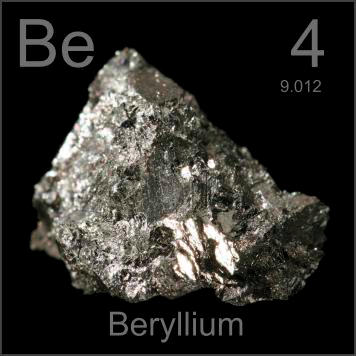
  • Beryllium, Be
  • Magnesium, Mg
  • Calcium, Ca
  • Strontium, Sr
  • Barium, Ba
  • Radium, Ra
These elements are described as "alkaline" earth metals because they form metal oxides with oxygen, which produce "alkaline" AKA basic (pH > 7) solutions when dissolved in water. One similarity among them is that they all have two electrons in their outermost shell of electrons (the ones that typically participate in chemical reactions). Consequently, they tend to ionize to a +2 cation and form salts with halogens and water, e.g., MgCl2, Ca(OH)2, etc.

Two of the alkaline earth metals are present in human bodies. Can you guess which ones?

Definitely NOT radium (it's radioactive!). Definitely not beryllium (toxic...). The two most prevalent group II elements in our bodies are magnesium and calcium. Think bones and ion pumps and enzyme cofactors...

Now, for the mnemonic:

Beryllium Metal Compounds Should Be Respected.

Tuesday, July 14, 2009

Periodic Table Series - Part I

The next few entries (18 to be exact) will be focused on the different groups in the periodic table, which is divided into groups and periods. Periods are horizontal rows, while groups are vertical columns, which often include elements with similar or at least related chemical properties. These similarities result from a variety of factors.

First, elements in the same group share the same electron configurations in the outermost "shell" or electronic sphere (the place where electrons are likely to be found) of the atoms. This means that the elements have the same number and "type" of the electrons that are most likely to participate in chemical reactions.

The first group (starting on the left and moving right) of the periodic table, Group 1, includes Hydrogen and the alkali metals, which are:
  • Lithium, Li
  • Sodium, Na
  • Potassium, K
  • Rubidium, Rb
  • Francium, Fr
Since the elements have clearly not been put into a very concise and well organized table (which has clearly not been named the "periodic table") and it is obviously not at all a simple matter to come by one of these nonexistent tables, you might want to memorize every single element in the periodic table... just for kicks.

So to aid you in this very important endeavor, I have come up with a few mnemonics. In their entirety, these learning devices will form a poem.

Herein Lies New Knowledge--Requisite Chemical Facts...

For some other useful mnemonics, check out the following link!


Wednesday, June 3, 2009

Cyanide's toxicity

Ever wonder why cyanide is so toxic? It looks pretty similar to a lot of other small anions... it has similar properties to a lot of other small anions... but it's also much more toxic than a lot of them. So what's so special about it?

All living, breathing humans (and other living, breathing prokaryotes) have an electron transport system/chain (ETS/C) in the mitochondiral membrane within their (our) cells. The main roll of this electron transport system is to--as the name implies--shuttle electrons around and in the process, make ATP. In other words, the electron transport system harnesses energy for the cells in our bodies. Without it, we can't really survive. It is part of the Kreb's cycle, which is a series of biochemical processes that break down food and convert it to energy. 

The last step carried out by the ETS involves the transfer of hydrogen from an enzyme called cytochrome oxidase to oxygen, thereby producing water. Cyanide interacts with cytochrome oxidase in such a way to prevent it from functioning normally in this last step of the ETS. As a result, aerobic metabolism slows way down but glycolysis, which produces pyruvate, continues chugging away. So pyruvate builds up in the cells and gets converted to lactic acid, thereby lowering the delicately balanced pH of the cell. Simultaneously, ATP production grinds to a halt. Without energy, our bodies stop working, i.e., we die. 

Friday, February 13, 2009

Artificially Sweet

Did you ever wonder what was actually in those artificial sweetener packets you might add to your coffee? The popular names on the market are Equal, Sweet N' Low and Splenda, although there are now many commercially available varieties.

Essentially, most of them contain some modified form of sugar that is not metabolized in the same way as standard table sugar (sucrose), thereby adding no caloric value to your diet.

Below are the chemical structures of the compounds present in the three artificial sweeteners mentioned above. Equal contains a mixture of aspartame, maltodextrin and dextrose.
Sweet N' Low is composed of saccharin, potassium bitartrate and dextrose.

Finally, Splenda simply contains a chlorinated derivative of sucrose called sucralose, in which three "OH" groups (hydroxyl groups) have been replaced by chlorine.


Tuesday, February 3, 2009

Oil 101

(Image courtesy of Creative Commons)

Ever wonder where oil comes from? Or how it got there? Or how we get it
out of there?

Oil is a "fossil fuel," which basically means it formed from fossils, i.e., the remains of plants/animals that died a
very long time ago, most of which ended up at the ocean floor. "But how," you might wonder, "did the animal/plant carcasses get turned into oil just by being dead?"

Over time, layers of sediment formed on top of the animal carcasses and eventually a very hard surface (rock) developed on top of them. Trapped between layers of hard sediment, without any oxygen (an environment in which some microorganisms thrive), the plant and animal material was eaten, metabolized and "broken down" into basic, carbon-rich material, which mixed with the surrounding sediments to form shale. But more plants and animals died, and more rock settled on top of the already present rock, causing significant pressure and heat to build up within the layers of hardness. This caused the oil to boil out in the forms of what we call "crude oil" and "natural gas," which accumulated in other, more suitable locations, such as porous rocks, where it was trapped (by less porous rocks surrounding the more porous rocks).

Although forming the oil and getting it trapped within these rocks was clearly the hard part (oh just hundreds of millions of years or so of Earth doing its thing), getting the oil out is not so easy either. First, we need to know exactly where the oil is. Of course, there are many places all over the Earth where large amounts of oil are trapped. In order to find them, geologists typically send shock waves into the Earth through layers of rock and the reflected waves are analyzed to
determine the presence or absence of oil. The reflected waves travel at different speeds, which are characteristic of the particular material through which they traveled.

Once the oil is located, oil drillers (e.g., Chevron) begin developing their plans--after having gained legal right to the land, of course--for drilling. Enter oil rig. Essentially, drill a big hole in the Earth, pump out the oil. A little bit of chemistry interwoven with this messy process, which I'll discuss in due time.

Tuesday, January 13, 2009

Jay Keasling in Newsweek

UC Berkeley Professor Jay Keasling was recently featured in Newsweek for his pioneering work on the development of a new route for the production of artemisinin, an effective antimalarial drug. Artemisinin had previously been extracted from wormwood plants, but the extraction process was time-intensive and not very efficient.

Keasling spliced wormwood genes into yeast DNA in such a way that the resulting cell would convert sugar into artemisinin. This new production method is much cheaper and more efficient than the previous method.

Even more importantly, the method will allow large scale production of artemisinin, which will be made available (and at a much lower cost) to the people who need it but could previously not afford it.

Monday, December 22, 2008

Cold Nuclear Fusion - Fact or Fiction?

Surely you have heard of the supposed "cold fusion," first reported in 1989 at a press conference (super sketch!) by Drs. Stanley Pons and Martin Fleischmann at the University of Utah. But did you ever wonder what it was? Or whether it actually works?

Nuclear fusion refers to the process by which multiple nuclei of similarly charged atoms unite to form a heavier atom and typically A LOT OF ENERGY--with the exception of atoms heavier than iron, which actually absorb energy on fusion. Due to the typically high energy output, nuclear fusion could potentially provide a useful source of energy for our growing--and increasingly demanding--global population. One significant problem is that the process typically occurs only at ridiculously high temperatures, such as those found in the Sun or in a hydrogen bomb. Not surprisingly, scientists have long been interested in designing cheap, safe and effective methods for controlled fusion to produce usable energy.

Pons and Fleischman described a system containing deuterated water (D2O), two palladium electrodes, and a current running through the electrodes. They claimed that the current caused the palladium electrodes to absorb deuterium atoms, which were then forced so closely together that they underwent nuclear fusion to produce neutrons and energy in the form of heat: "...fusion occurs, out of that comes one or two new elements of less mass, and the difference is the energy that comes out. And that then would boil water, essentially. And when you boil water, you can make steam. And when you make steam, you can drive a turbine. And if you can drive a turbine, you can create electricity..." (watch the press conference).

The two scientists concluded that cold fusion had occurred based on the results of a calorimetric experiment that showed a 4:1 ratio of heat put into the experiment versus heat released. They also analyzed the gas released by the reaction by mass spectrometry and observed the presence of tritium. Finally, they claimed to have captured the ejected neutrons from the reaction vessel with water, and the water was found to emit gamma rays of a characteristic wavelength.

Skeptical scientists immediately tried to reproduce a similar cold fusion and they found largely inconsistent results. Many suggested that the heat Pons and Fleischman observed was produced either by the current or by reactions in the water.


Even to this day, many scientists continue to pursue cold fusion as a viable energy alternative. Until someone disproves the process, it will remain elusive--maybe fact, maybe fiction. But the lesson remains: reputable, peer-reviewed scientific journals are a much more reliable medium than a press conference through which to share scientific results.

Wednesday, December 3, 2008

Chemist of the Day: John D. Roberts

Born June 9, 1918 (Yes, he's 90 and still going strong) John D. Roberts got his BA in 1941 and his PhD in 1944 from UCLA. After working as a professor at MIT, Roberts moved to Cal Tech, where he has remained ever since. He has made important contributions to physical organic chemistry--specifically in the areas of nuclear magnetic resonance spectroscopy, resonance in organic chemistry, structural determination, and kinetics.

He has written books on various topics in a manner that is quite easy to read, even if you don't know much about chemistry or anything for that matter. This is one of the many reasons why he has been selected as the chemist of the day--not only has he made significant advances in diverse areas of chemistry, he has very effectively developed and documented these ideas for new generations of chemists and he continues to serve as an inspiration to us all.

Below is a list of some of his important books, all of which I highly recommend to anyone interested in organic chemistry.

Roberts, J.D. : Nuclear Magnetic Resonance. Mc-Graw-Hill, New York, 1959.

Roberts, J.D. :
Notes on Molecular Orbital Calculations. W. A. Benjamin, New York, 1961. [one of my particular favorites!]

Roberts, J.D. : An Introduction to the Analysis of Spin-Spin Splittings in High Resolution Nuclear Magnetic Resonance Spectra. W. A. Benjamin, New York, 1961.

Roberts, J.D., Caserio, M. : Basic Principles of Organic Chemistry. W. A. Benjamin, New York, 1977.

Roberts, J.D. :
At the Right Place at the Right Time. ACS-Books, Amer. Chem. Soc., 1990.

Roberts, J.D. : ABC's of FT-NMR. University Science Books, 2000.


Tuesday, November 25, 2008

Molecule of the Week: BPO


The major ingredient in many acne treatments is benzoyl peroxide (BPO). Did you ever wonder how it works?

BPO is a member of a larger class of compounds called peroxides, which are characterized by an oxygen-oxygen single bond (you may be familiar with hydrogen peroxide, which is the simplest member of this family). A common property among peroxides is a relatively low bond dissociation energy associated with the oxygen-oxygen single bond (51 kcal/mol for hydrogen peroxide). This weak bond easily dissociates to form two radical species, which can undergo subsequent reactions with other chemicals present in the surrounding environment.

The efficacy of BPO stems mainly through its ability to induce breakdown of the outer layer(s) of skin (termed "desquamation" in the medical community). It acts by breaking up the structural proteins (keratins) in the affected area. Once absorbed by the skin, BPO is converted to benzoic acid, presumably via hydrogen abstraction from the keratins.


Friday, November 21, 2008

Photochemistry and Skin Cancer

Did you ever wonder why light from the sun (ultraviolet light) damages your skin and can cause skin cancer?

Ultraviolet (UV) radiation has wavelengths in the range of 200 nm to 300 nm. If you recall the relationship between energy and frequency, E=hv, where v=c/wavelength and c=the speed of light, then we can see that the energy of UV light can range from about 95 kcal/mol to 143 kcal/mol.

Energies in this range are sufficient to induce electronic absorption in molecules. Common organic molecules contain bonds that can be broken with the amount of energy contained in UV light.

One reaction in particular that is driven by UV light is the [2+2] cycloaddition of two thymine molecules in DNA. As you may already know, DNA is composed of two strands of connected nucleotides. Each nucleotide is made up of a nitrogen-containing heterocycle (cytosine, guanine, thymine or adenine), a sugar, and a phosphate group, which links each nucleotide to the next one in a long chain of nucleotides.
Since thymine has a double bond, it can undergo a reaction known as "cycloaddition," in which two double bonds connect with each other to form a four-membered ring (cyclobutane). As you can see below, this is a significant change! Anything that significantly alters the structure of your DNA can have drastic consequences on a number of different processes in your body.The [2+2] cycloaddition of thymine is only one of many reactions that can occur in the presence of high energy UV radiation. So wear your sunscreen!

Monday, November 10, 2008

An Introduction to Eutectic Points

Did you ever wonder why grinding two solids together sometimes produces a liquid?

Depending on the relative amounts of each component in a mixture, the melting point varies. The lowest temperature (as a function of mixture composition) at which the mixture melts is referred to as the "eutectic temperature" from the Greek word for "easily melted." The temperature and composition associated with the eutectic reaction are collectively called the "eutectic point."

(salt-less icy road image complements of Creative Commons)

Eutectic points are exploited in various ways. You are probably familiar with many of them already! For example, during the winter people often sprinkle salt (sodium chloride) over the roads in order to decrease the melting/freezing point of ice. So if the temperature outside is 0°C, the water present on the road will not freeze. The eutectic temperature of water and salt is -21.1°C (for 76.7% water and 23.3% salt), so it would have to be much colder outside for a significant amount of ice to develop on the road. Various other solids can be mixed with water to decrease its freezing point as well!

But why does mixing two solids together always result in a decreased melting/freezing point rather than an increased melting/freezing point?

It doesn't! Take, for example, a 1:1 mixture of mesitylene and hexafluorobenzene, which melts at 34°C (1). The melting point of benzene is 5°C, while the melting point of mesitylene is -44.8°C. In this case, we see an increase in the melting point on mixing two substances together!


It is believed that a complex is formed between hexafluorobenzene and mesitylene. The complex is thought to be a "Lewis base - Lewis acid" type complex, in which one component (electron-rich mesitylene) supplies charge to the other component (electron-deficient hexafluorobenzene). Hexafluorobenzene is so electron-deficient due to the strong electron-withdrawing nature of the fluorine substituent, which is the most electronegative element.

[1] Patrick, C. R.; Prosser, G. S. Nature, 1960, 187, 1021.

Saturday, October 25, 2008

Helium Balloons and Speed of Sound in a Gas


(thanks Creative Commons)

Ever wonder why inhaling helium from a balloon increased the pitch of your voice?

The pitch of your voice depends on many factors: the shape of your throat, mouth, nasal passages, etc. But most importantly, it depends on the gas present in your lungs. Under normal circumstances, the gas in your lungs is air. The speed of sound through air at 20°C is roughly 343 m/s (the temperature in your lungs is a little bit hotter, so the speed of sound through the air in your lungs is actually about 353 m/s).

What if the gas in your lungs is helium?

In general, the speed of sound, v, in a gas with molar mass M and adiabatic constant γ (which depends on the gas), at temperature T, is given by:where R is the ideal gas constant (8.314 J·K-1·mol-1).

For Helium, M is about 4 g·mol-1=0.004 kg·mol-1 and
γ=5/3, so the speed of sound at the temperature of your lungs is about 1036 m/s in Helium. This is A LOT FASTER than the speed of sound through air!

For air, which is composed of many different gases (but mostly nitrogen and oxygen), the average molar mass is about 29 g·mol-1=0.029 kg·mol-1 and γ=1.4, which accounts for the decreased speed of sound through air of about 353 m/s.

But why does this increase the pitch of your voice?

Just like any wave, the speed of a sound wave is related to the frequency and to the wavelength of the wave:

speed=frequency·wavelength

The pitch (frequency) of the sound wave that gives rise to your voice in helium increases because the speed of the wave increases, while the wavelength stays the same! So you might be wondering what your voice would sound like if you inhaled a really heavy gas, like argon or krypton... Your voice would get deeper!
But DON'T TRY IT! You might suffocate!

Green Fluorescent Protein

The 2008 Nobel Prize in Chemistry was awarded to Osamu Shimomura, Martin Chalfie and Roger Tsien for their combined discovery and application of Green Fluorescent Protein (GFP).

GFP was isolated from a Pacific Northwest jellyfish by Shimomura, who noted its absorption of blue or UV light and resultant bright green fluorescence. It is now used widely in biochemistry and biology as a tag for proteins and as a marker for gene expression. In particular, the gene that encodes GFP can be spliced into the genome (of essentially any organism, from yeast to pigs or even bunnies...) in the vicinity of a gene that encodes a protein of interest. The expression of GFP is then linked to the expression of the protein under investigation. Whenever and wherever that protein is expressed is then easy to monitor because GFP is produced simultaneously!

(Image from Creative Commons)

You can probably imagine some of the other fascinating potential applications of GFP, ranging from tracking cancer metastasis and angiogensis in mice, to measuring calcium concentration in vivo.